Mount Toubkal and Sahara Desert Combined Trek Guide
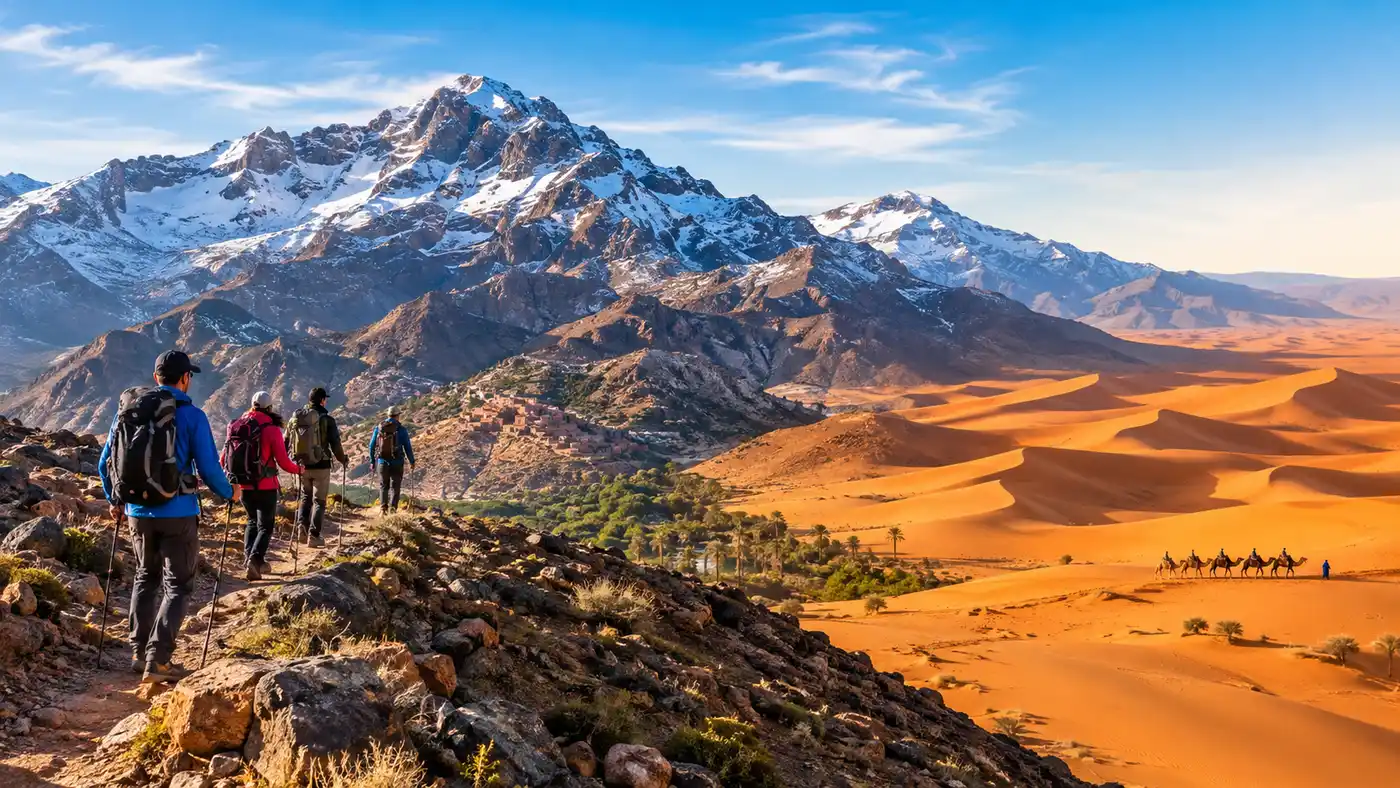
Standing on a razor ridge at 4,167 meters with frost biting your fingers, it feels absurd that just three days later you could be pouring fine orange sand out of your boots while sipping sweet mint tea under date palms. Morocco lets you pull off this exact contrast in less than a week. Taking on a mount toubkal and sahara desert trek puts two wildly different worlds into a single journey. You burn your quads on rocky scree above the clouds, cross the spine of the High Atlas, and descend into the silent expanses of the deep south.
Most travelers try to choose between the mountains and the dunes. They worry about the driving distance or struggle to figure out how to pack for sub-zero alpine winds and dry 32-degree desert heat in the same duffel bag. Having done this route across six packed days, I can tell you it is completely doable, provided you pace the transfer days and plan the route logically. Here is how to stitch the High Atlas and the desert together without losing your mind in transit.
Book your mount toubkal trek experience:
Why Tackle a Mount Toubkal Trek and Sahara Desert Tour in One Trip?
Logistically, it makes sense. Marrakech serves as the launchpad for both destinations. Imlil, the trailhead village for Toubkal, sits just 67 kilometers south of the city. Meanwhile, the southern highway to Ouarzazate, the gateway to the Sahara, cuts straight through the Tizi n'Tichka pass right on the mountain range's eastern flank. Instead of hiking Toubkal, returning to Marrakech to sit in traffic, and heading back east towards the sand, a smart mount toubkal and sahara trek combined route moves in an efficient loop.
The contrast resets your brain. Alpine trekking is grueling and technical. You spend hours watching the heels of the hiker ahead of you, listening to loose shale rattle down the gullies, and concentrating on your breath in thin air. Reaching the summit is exhilarating, but it wears down your knees and leaves your nervous system humming. Dropping down into the Draa or Dades Valley afterward feels like entering a different dimension. The physical effort drops, the horizon opens up, and you get to absorb the landscape from the back of a camel or by a quiet fire.
There is also the cultural shift. In the High Atlas, you spend time among Amazigh communities who have lived on terraced walnut farms and stone hamlets for centuries. As you descend toward the Sahara, the architecture shifts from flat-roofed stone cubes to dramatic mudbrick kasbahs. You encounter distinct music, food, and nomadic traditions that feel miles away from the mountain trails.
Pro tip: Do the mountain summit first. Climbing Toubkal takes heavy physical exertion, and doing it with desert dust already lingering in your lungs and camel-sore hips makes the scree ascent twice as punishing.
Classic 6-Day Itinerary: High Atlas to Erg Chebbi
You can run this loop in several variations, but six days is the sweet spot. It gives you enough time to climb Toubkal using a standard two-day Toubkal itinerary, rest during a scenic driving day, and spend two nights exploring the dunes before returning to Marrakech.
A mental mount toubkal and sahara desert trek map looks roughly like a lopsided triangle. The route starts south from Marrakech to Imlil, cuts up to the summit and back down, swings east over the Tizi n'Tichka pass into the desert, and traces the N9 and N10 highways back west.
- Day 1 (Marrakech to Refuge des Mouflons): Early morning transfer to Imlil (1,740m), meeting your mountain guide and mule team, then a 5-hour hike past the shrine at Sidi Chamharouch up to the stone refuge at 3,207 meters.
- Day 2 (Summit Push to Imlil): Pre-dawn start at 4:30 AM over steep scree, summiting Toubkal by 8:30 AM, descending back to the refuge for soup, and continuing all the way down to a guesthouse in Imlil by late afternoon.
- Day 3 (Imlil to Dades Valley): Morning pickup in a 4x4, traversing the Tizi n'Tichka pass (2,260m), stopping at the fortified village of Ait Benhaddou, and sleeping in the dramatic Dades Gorge.
- Day 4 (Dades to Merzouga and Erg Chebbi): Drive past Tinghir and the Todra Gorge, reaching the desert edge at Merzouga by 4:00 PM for an hour-long camel ride into a Berber tent camp deep in the dunes.
- Day 5 (Merzouga to Ouarzazate): Sunrise over the sand dunes, a quick breakfast, and a scenic drive west through the desert outpost of Rissani and the Draa Valley to overnight in Ouarzazate.
- Day 6 (Ouarzazate to Marrakech): A relaxed morning exploring the Atlas Film Studios or the Kasbah Taourirt before the four-hour mountain drive back across the Tizi n'Tichka pass to Marrakech.
That second day is long. Descending nearly 2,400 vertical meters from the summit down to Imlil burns your quads. But slipping into a hot hammam in a village guesthouse that evening makes every ache feel earned. If you have an extra day, add it between the mountain descent and the long drive. Spending a night in the peaceful apple orchards of Aroumd gives your legs time to recover.
Erg Chebbi vs Erg Chigaga: Choosing Your Desert Route
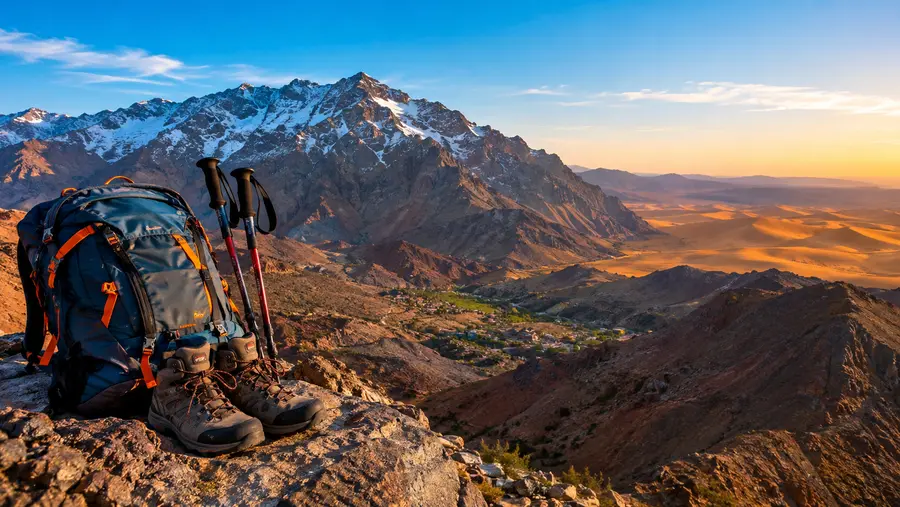
When booking a sahara trek mount toubkal hike, one decision shapes the entire back half of your trip: Erg Chebbi or Erg Chigaga? Both offer dramatic golden sand, but they deliver completely different experiences.
Erg Chebbi sits near Merzouga. Its main selling point is height and accessibility. The dunes rise up to 150 meters, towering like static golden waves right at the edge of the flat, black gravel desert. Because paved roads run almost straight to the base of the sands, logistics are straightforward. You can step out of a car, hop on a camel, and be at a luxury camp with running water and solar electricity in under 45 minutes. The trade-off is popularity. You will see quad bikes, other tour groups on the crests, and camp clusters within sight of one another.
Erg Chigaga is the wild sibling. Reaching these dunes requires a rough, two-hour off-road drive across dried salt flats and rocky plateaus from the tiny oasis town of M'Hamid. The dune field stretches for almost 40 kilometers, feeling completely detached from civilization. There is virtually no phone signal. The sand shifts in endless ripples without a single hotel building breaking the horizon. If you want raw silence and darker night skies, Chigaga wins hands down. Just be prepared for a bouncy, bone-rattling ride in the 4x4 to get there.
| Feature | Erg Chebbi (Merzouga) | Erg Chigaga (M'Hamid) |
|---|---|---|
| Dune Height | Up to 150 meters | Up to 120 meters |
| Access Type | Paved highway to dune edge | 2-3 hours rough 4x4 off-roading |
| Atmosphere | Lively, accessible, luxury camps | Wild, remote, traditional, silent |
| Travel Time from Imlil | Around 9 to 10 hours driving | Around 8 to 9 hours driving |
| Best For | Short itineraries, photography, comfort | Adventurers, wilderness seekers |
Personally, if you have just survived the physical strain of climbing Toubkal, Erg Chebbi is easier on a tired body. But if you hate crowds and want an authentic desert feel, taking the southern fork toward Erg Chigaga makes the whole journey feel like an old-world expedition.
Note: Sandstorms happen without warning between March and May. If high winds kick up in either dune field, pack your electronics in ziplock bags and keep an eye scarf wrapped tightly across your nose and mouth.
Book your mount toubkal trek experience:
Mount Toubkal and Sahara Desert Trek Cost: Real Budgets and Logistics
What should you expect to spend? The total mount toubkal and sahara desert trek cost varies widely depending on whether you join a group tour, hire private transport, or attempt to piece it together yourself using shared grand taxis and local buses.
Putting together the trip independently is technically possible, but it eats up valuable days. You can catch an inexpensive collective taxi from Marrakech to Imlil for about 50 dirhams (around $5). However, getting from Imlil out to Merzouga or M'Hamid on public transport requires multiple bus connections through Ouarzazate and Tinghir, turning a one-day drive into two days of waiting at dusty road junctions. Most travelers find that booking a private driver or a combined agency package saves enough time to justify the price.
For a fully organized 6-day private tour including mountain guide, mules, refuge fees, private 4x4 transport, desert camp, and most meals, expect to pay between $650 and $1,100 per person based on a party of two. In a small group of four to six friends, that price can drop closer to $480 each. Independent travelers who hire guides locally in Imlil and catch the CTM bus from Marrakech to Merzouga can cut costs down to around $280, though it requires significantly more patience.
Keep cash in small denominations. While tour operators accept card payments online, village shops, tips for your mule drivers, roadside orange juice stalls, and small kasbah entry tickets all run entirely on paper dirhams. There are no ATMs between Imlil and the refuge, and the cash machines in rural desert towns frequently run out of money on weekends.
Packing Strategy: From Freezing Summits to Blistering Sand
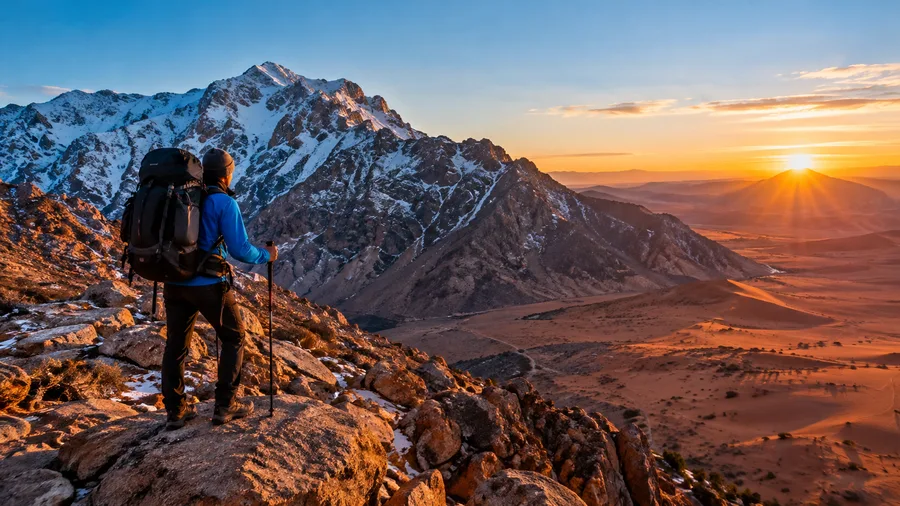
Packing for this combined trip requires discipline. You are preparing for two microclimates that feel like opposite ends of the earth. On the Toubkal summit ridge, morning temperatures can drop to -5 degrees Celsius even in summer, with biting wind chill. Two days later, you will sit on a dune where the thermometer easily clears 30 degrees.
The secret is leaving a storage bag behind. You do not need to carry your desert linen shirts up to the mountain refuge, and you certainly do not need your heavy crampons and summit down jacket bumping around in the desert camp. Most guesthouses in Imlil or hotels in Marrakech will happily store your extra luggage in a secure locked room while you complete each leg.
- Layering essentials: Pack merino wool base layers for Toubkal summit morning. They breathe well, fight odor, and work surprisingly well during cold desert nights when temperatures crater after dark.
- Footwear choices: You need sturdy, broken-in hiking boots with good ankle support for the brutal Toubkal scree. For the desert, bring lightweight trail runners or sturdy sandals like Chacos, as hiking dunes in stiff mountain boots is pure torture.
- Sun and wind defense: A wide-brim hat works on the trail, but in the Sahara, buy a traditional cotton cheche (turban scarf) for about 60 dirhams. Nothing else keeps fine blowing sand out of your ears, neck, and teeth quite as effectively.
- Hydration and tech: Bring a 2-liter water bladder plus an insulated bottle that will not freeze on Toubkal. Cold mountain air kills phone batteries in minutes, so carry a rugged power bank in an inside pocket close to your chest heat.
Timing your trip carefully makes packing much simpler. Checking the best time of year to climb Toubkal will show that spring (April to May) and autumn (September to October) offer the most balanced weather for both mountain and desert. Winter brings heavy alpine snow requiring technical gear, while mid-summer desert temperatures routinely push past a punishing 42 degrees.
Frequently Asked Questions about mount toubkal and sahara desert trek
Can a beginner complete this combined trip?
Yes, provided you have a decent baseline of cardiovascular fitness. Toubkal requires no technical mountaineering skills in spring and autumn, but the steep 1,000-meter summit climb is physically demanding. The desert portion is completely relaxed by comparison.
How long is the drive between the mountains and the desert?
The drive from Imlil to Merzouga takes about 9 hours of pure road time. Breaking it up by staying overnight in the Dades Valley or Skoura makes the long mountain highway scenic and enjoyable instead of exhausting.
Do I need a guide for both portions?
A licensed local guide is mandatory by Moroccan law for hiking Mount Toubkal past the town checkpoints. In the desert, you will have camel handlers and camp hosts, so you do not need an independent trekking guide unless you plan on walking long distances across the dunes unaccompanied.
Quick Reference
- Ideal duration: 6 to 7 days
- Toubkal summit elevation: 4,167 meters
- Primary base: Marrakech
- Best months: April, May, September, October
- Rough cost: $480 to $900 per person
Book your mount toubkal trek experience:
Before You Go
Combining the snowy heights of North Africa with the sweeping silence of the Sahara is easily one of the most rewarding adventures on the continent. It tests your legs on high alpine stone, rewards you with panoramic vistas over the High Atlas, and finishes with lazy evenings under billions of desert stars. Plan your transfers carefully, pack your layers intelligently, and give yourself enough breathing room between the summit push and the long highway south.
Read more about mount toubkal trek.