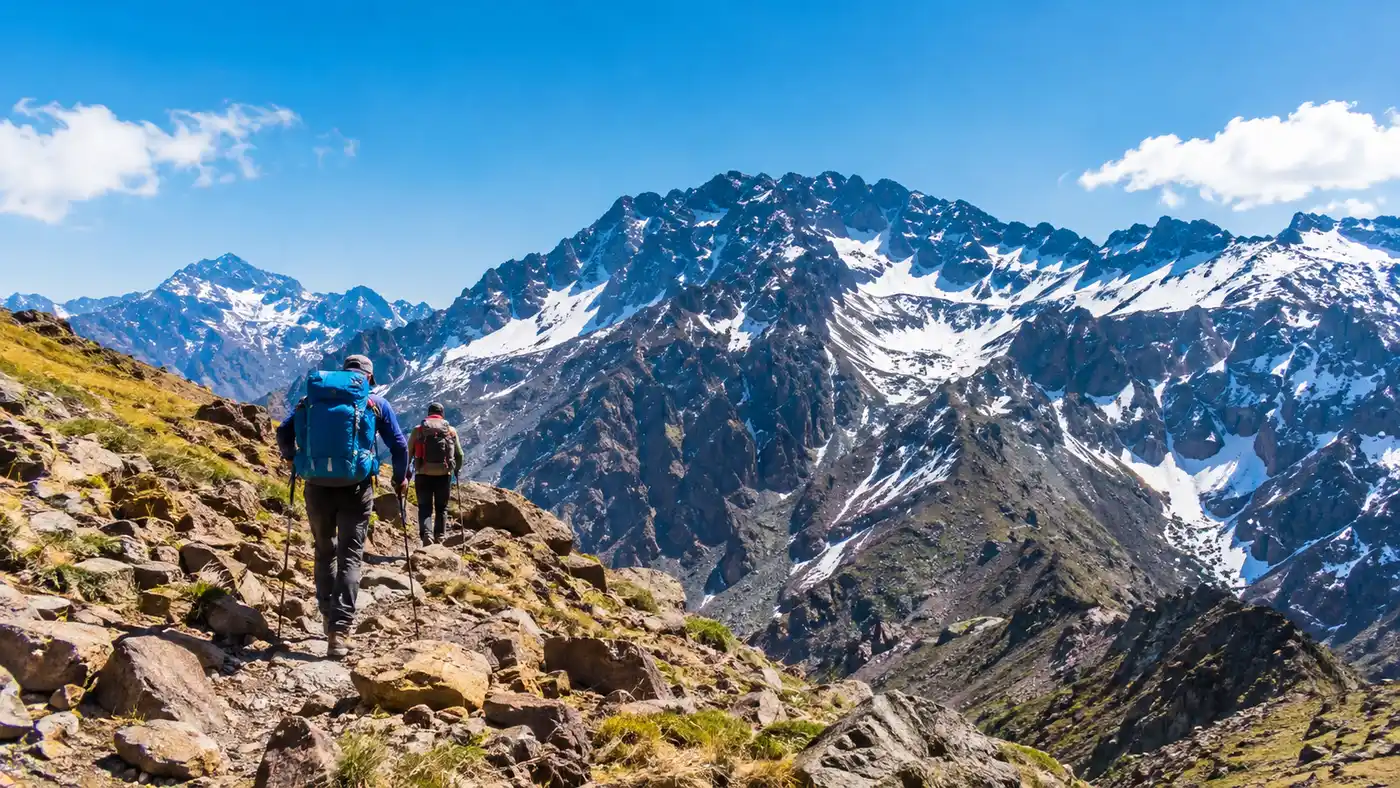
Best Time to Climb Mount Toubkal: Weather and Month Guide
Standing on the rocky ridge at four in the morning with freezing wind cutting through your windbreaker makes you question your life choices. Two hours later, when the sun breaks over the jagged peaks of the High Atlas and paints the Moroccan valleys in amber, you forget the numb fingers. Finding the best time to climb mount toubkal really comes down to what kind of mountain experience you want to have. The peak sits at 4,167 meters, high enough to make its own weather regardless of what is happening down in the sunny courtyards of Marrakech.
Most trekkers assume Morocco is warm year-round. That misconception causes a lot of misery on this mountain. While you might sip mint tea in a t-shirt in the lower villages, the higher trails can dump snow on your tent or bake you under relentless alpine sun depending on the month you choose. Below is a realistic look at seasonal weather, trail conditions, refuge life, and month-by-month expectations across the High Atlas.
Book your mount toubkal trek experience:
Spring Season: Mount Toubkal Trek April to May
Spring is my personal favorite window. If you ask local Berber guides about the best time to trek mount toubkal, most will point directly toward late April or May. The winter snow begins its retreat up the mountain slopes, meltwater fills the dry rocky streams, and the valleys around Imlil burst into blossom with apple and walnut trees. It feels alive.
A mount toubkal trek march is still very much a winter expedition. Thick snowpacks usually blanket the trail from the shrine at Sidi Chamarouch all the way up to the French Alpine Club (CAF) refuge at 3,207 meters. Crampons and walking axes are mandatory. By mid-spring, the picture shifts quickly. Doing a mount toubkal trek april brings warmer afternoon air, though large snow patches routinely linger in the steep South Col scree fields. You get long daylight hours, relatively quiet dorm rooms in the refuges, and crisp mornings that make the uphill grind bearable.
Once you hit late spring, conditions mellow out. A mount toubkal trek may offers arguably the most balanced hiking conditions of the year. Daily temperatures around the refuge hover near 14°C to 18°C during the afternoon. The bitter night frosts begin to soften. If you tackle a mount toubkal trek in may, you rarely need full mountaineering boots, though walking poles become your best friend when descending loose stones where the snow has just cleared.
Pro tip: Even in May, pack microspikes or check with your local guide in Imlil before leaving the village. An unexpected overnight cold front can turn wet spring scree into slick black ice by dawn.
Summer Heat and High Altitude: Mount Toubkal Trek August
Summer brings thousands of travelers who combine a city break with a mountain ascent. Between late June and August, the mountain is entirely dry. The snow has melted away, leaving exposed basalt rock, slippery shale, and endless red dust. It is easily the most accessible season, but it brings its own set of brutal challenges.
Marrakech during summer routinely hits 43°C in the shade. Escaping to the mountains sounds wonderful until you start hiking up from Imlil at 1,740 meters under blazing sun. On a mount toubkal trek august, the lower valley feels like an oven between 11:00 AM and 3:00 PM. Heat exhaustion catches people out before they even reach the refuge. You have to start walking at 6:30 AM to beat the furnace-like heat bouncing off the canyon walls.
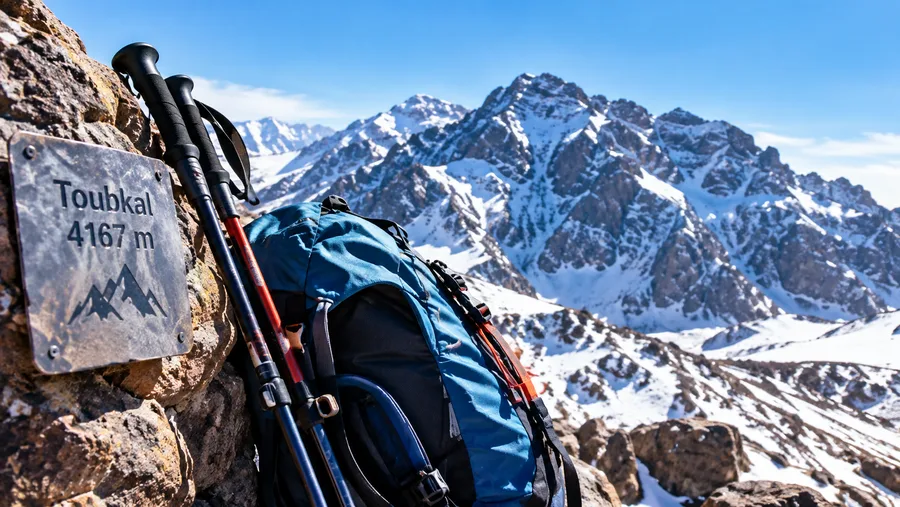
Higher up, things cool down significantly. At the mountain refuge, summer daytime temperatures sit comfortably around 22°C. Summit mornings are chilly, maybe 4°C, but completely manageable in a basic fleece and shell jacket. The major nuisance during summer is the crowd. The trails get noisy, and you will share the final summit ridge with dozens of other hikers taking photos by the metal pyramidal summit marker.
Note: Summer afternoons in the High Atlas bring violent, fast-moving thunderstorms. Lightning strikes on open scree slopes are a real danger, so plan your summit push to get down to refuge level by midday.
Autumn Conditions: Mount Toubkal Trek October and November
When the summer crowds thin out in September, autumn steps in with clear blue skies and stable air. For hikers wanting dry trails without scorching heat, October is brilliant. The harsh summer haze disappears, leaving the sharpest horizon views of the year where you can sometimes spot the northern edge of the Sahara Desert from the peak.
Planning a mount toubkal trek october gives you moderate valley walking conditions and empty trails. What about the mount toubkal trek october difficulty? Physically, it is straightforward trekking because you do not need to kick steps in snow or battle fierce heatwaves. You are dealing with straightforward high-altitude scree. If you plan a standard mount toubkal trek october itinerary, spending two or three days on the mountain gives your body enough time to adjust to the elevation without dealing with freezing storms. If you want a quick ascent, a Mount Toubkal 2-day trek itinerary works exceptionally well in mid-autumn before the snow arrives.
By the time a mount toubkal trek november arrives, the mountain enters a transition phase. Days shorten dramatically. Afternoon temperatures at the refuge plunge toward 5°C, and night freezes are guaranteed. The first heavy snowstorms can arrive anytime from the second week of November onward. One week you could walk up in trail runners; the following Tuesday you might need full crampons and waterproof gaiters.
- October weather stability: Crisp, clear days with very low rainfall and daytime refuge temperatures around 12°C.
- November unpredictable storms: Rapid transitions from dry scree to frozen mud and early winter snowdrifts.
- Refuge atmosphere: Autumn evenings are quiet, with wood stoves burning in common areas and plenty of space to sleep comfortably.
- Trail footing: Loose scree in the South Col is completely dry until the first seasonal blizzards hit.
Book your mount toubkal trek experience:
Winter Mountaineering: Mount Toubkal Trek December to February
Winter turns Toubkal into a proper alpine challenge. Between December and February, the mountain sheds its dusty trekking persona and demands real respect. The gully paths are erased under thick snow, temperatures at the peak drop down to -15°C with wind chill, and daylight hours are short.
Setting out on a mount toubkal trek december means carrying heavy kit. You will need winter mountaineering boots, 12-point crampons, an ice axe, and thick thermal base layers. The trail past the refuge disappears beneath steep snow ramps. For those with basic winter training or an experienced mountain guide, this is easily the most rewarding season. The mountain looks incredible under pure white snow against deep blue North African skies. For a comprehensive look at required equipment and crampon technique, take a look at our detailed Mount Toubkal winter trek guide.
January and February bring the deepest snowpack. The refuges are cold at night because stone walls hold the alpine chill, so you need a four-season sleeping bag rated down to at least -10°C comfort. Avalanches can occur on the steeper slopes after heavy storms, which means your guide must know how to evaluate local snowpack stability before committing to the summit couloirs.
Month-by-Month Weather and Conditions Overview
To help you narrow down the best time to climb toubkal for your fitness and experience level, this comparative overview outlines what to expect at different points in the year.
| Month | Refuge Temp (Day) | Summit Temp (Dawn) | Snow Conditions | Trail Vibe |
|---|---|---|---|---|
| January - February | -2°C to 4°C | -12°C to -5°C | Deep, widespread snowpack | Quiet, serious mountaineers |
| March | 3°C to 8°C | -7°C to -2°C | Heavy snow, spring thawing | Moderate winter trekkers |
| April | 8°C to 13°C | -3°C to 2°C | Patchy snow above 3,500m | Busy, classic trekking season |
| May | 13°C to 18°C | 0°C to 5°C | Minimal snow in gullies | Peak spring hiking traffic |
| June - August | 20°C to 26°C | 4°C to 9°C | Completely dry scree | Crowded, hot lower valleys |
| September - October | 12°C to 17°C | -1°C to 4°C | Bone dry, clear air | Moderate, pleasant trekking |
| November - December | 2°C to 7°C | -8°C to -2°C | First winter storms arrive | Quiet, cold, rapidly changing |
Your choice of footwear depends entirely on these monthly shifts. Hiking up the South Col in stiff plastic boots in July will give you horrific blisters. Conversely, attempting the same col in soft hiking shoes in January can easily cost you a few frostbitten toes.
- Footwear choice: Sturdy trail running shoes or light boots work for June through September; stiff B2-rated mountaineering boots are essential from December to March.
- Hydration requirements: You need at least 3 liters of water per day in summer due to extreme dry heat, whereas 1.5 to 2 liters suffices in colder spring months.
- Clothing layers: A three-layer system works in autumn and spring; winter demands heavy down parkas and windproof hardshells.
- Refuge booking: Reserve bunk spaces weeks ahead for May, September, and October; winter weekdays often have spare beds on arrival.
Frequently Asked Questions about best time to climb mount toubkal
What is the single best month to climb Mount Toubkal?
October is widely considered the best month overall. The scorching summer heat in the lower valleys has cooled down, the skies are usually crystal clear, and the winter snow has not arrived yet. May is a very close second if you enjoy seeing alpine wildflowers and snow-dusted ridges.
Can a beginner climb Toubkal during winter?
Yes, provided you hire an experienced local guide and rent the proper gear in Imlil. Winter ascents require crampons and ice axes, but the normal South Col route is not technically difficult. You must, however, possess decent physical stamina and be prepared for freezing wind and sub-zero temperatures.
Is Toubkal dangerously hot to climb in July and August?
The summit itself is never dangerously hot, usually sitting around 8°C in the morning. The hazard lies in the lower approach hike between Imlil and Chamharouch, where temperatures regularly exceed 35°C under direct sunlight. Start hiking at first light to avoid dehydration.
Quick Reference
- Sweet spot: May and October
- Winter gear required: December through March
- Hottest stretch: July and August
- Summit altitude: 4,167 meters
- Refuge elevation: 3,207 meters
Book your mount toubkal trek experience:
The Bottom Line
There is no universally perfect month for everyone on Toubkal. If you want a comfortable walk over scree with light bags, stick to May, September, or October. If you crave an alpine challenge with crampons crunching on hard-packed snow, book your trip between January and March. Pick your season honestly based on your gear, your cold tolerance, and how much you enjoy sharing trails with others. When you stand on that metal triangle looking out over North Africa, the sweat and early morning shivering will have been worth every step.
Read more about mount toubkal trek.