Mount Toubkal Winter Trek: Snow Climbing and Gear Guide
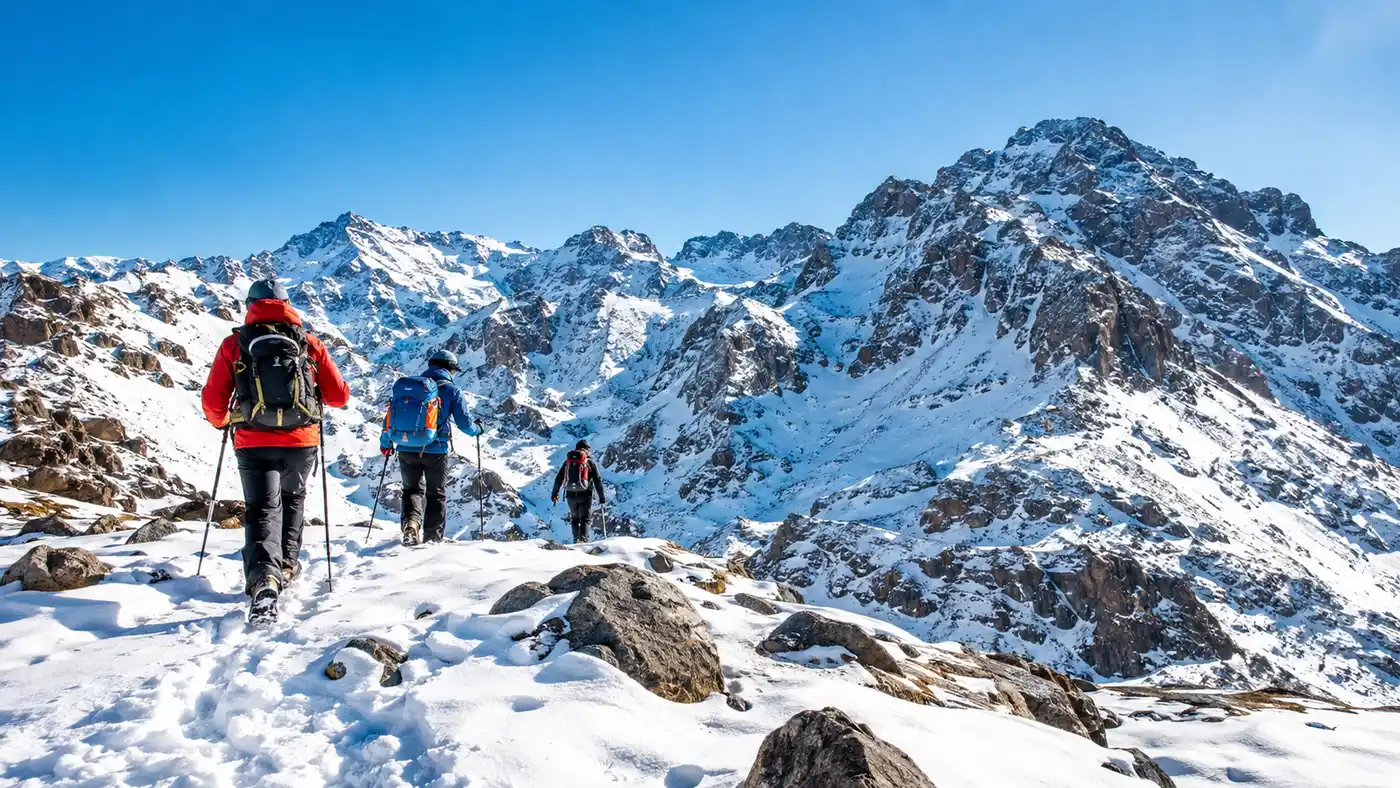
At 5:30 in the morning outside the Les Mouflons refuge, the cold bites your cheeks immediately. The thermometer screwed into the stone wall reads minus eight Celsius. Below your boots, the frozen snow crust screeches with every tiny shift of weight. Taking on a mount toubkal winter trek turns what is an uphill scree slog in July into a serious alpine mountaineering outing. You trade dust, loose shale, and blistering heat for hard snow, steel crampons, and jagged ridgelines framed by brilliant blue North African skies.
Most hikers head to the High Atlas between May and September, which leaves the peak quiet and raw during the colder months. Winter strips away the crowds. The valleys sleep under deep drifts, and the jagged gullies look more like the Pyrenees than anything you would expect to find ninety minutes outside Marrakech. But snow transforms the terrain completely. Slopes that feel harmless in trainers during midsummer turn into slick sliding boards where a stumble without an ice axe can end hundreds of meters below on exposed rock. Going prepared makes all the difference between a miserable retreat and standing alone on the roof of North Africa at 4,167 meters.
Why Choose a Mount Toubkal Trek in Winter?
The mountain is simply prettier under white cover. In summer, Toubkal is a vast brown heap of shattered basalt and dust. In winter, those identical slopes look like a genuine alpine kingdom. Snow fills the gullies, smooths out the tedious scree fields, and softens the brutal, loose steps that leave hikers exhausted in August. Walking on firm snow using crampons is often physically easier than slipping backwards on loose shale for five straight hours.
There is also the quiet. Summer brings lines of hundreds of hikers chattering up the trail from the refuge to the summit ridge. In January or February, you might share the entire South Cirque with maybe a dozen climbers. The air feels thinner and sharper. Sunrises cut pink across the ridges of Ouanoukrim, and the desert haze on the southern horizon disappears completely. Looking south on a crisp winter dawn, you can see the flat brown plateau of the Anti-Atlas baking in dry light while your mustache freezes solid.
You also get a proper introduction to snow climbing without paying thousands of dollars for an expedition to the Alps. The mountain serves as one of the most accessible 4,000-meter winter training grounds on Earth. You leave Europe or coastal Morocco in the morning and reach base camp the next afternoon. That speed of approach is almost impossible to find in other major mountain ranges.
Pro tip: Flip your water bladder hose upside down and blow the water back into the reservoir after every sip, or the tube will freeze into a solid stick of ice within twenty minutes above 3,500 meters.
Book your mount toubkal trek experience:
Mount Toubkal Trek Winter Skills: What You Actually Need to Know
You do not need to be an expert ice climber to summit Toubkal in snow. You do, however, need genuine familiarity with winter movement. The upper slopes sit at roughly 35 degrees. That angle does not require vertical front-pointing on ropes, but it is steep enough that a slip without prompt self-arrest means you slide until you hit boulders. If you slide on bulletproof early-morning crust, you pick up speed terrifyingly fast.
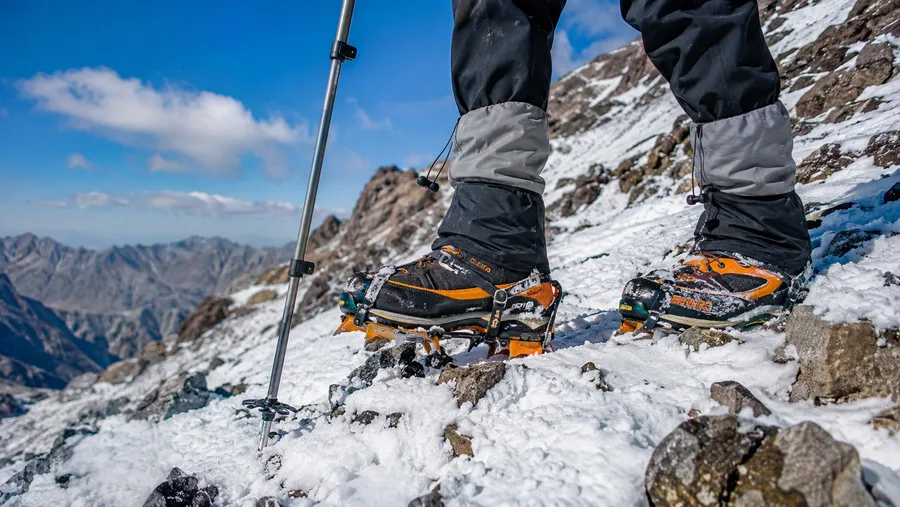
Local guides are legally compulsory for all visitors now, which takes some navigational stress away. Even so, your guide cannot move your feet for you. Mastering a basic set of mount toubkal trek winter skills before tackling the headwall keeps you safe. You need to know how to walk flat-footed in crampons (the French technique) so all ten downward points bite the ice simultaneously. If you try to walk on your toes like you are climbing stairs, your calf muscles will seize up inside forty minutes.
Knowing how to hold your ice axe correctly matters just as much. The pick should always point backward when you hold the adze in your uphill hand. If you trip, you immediately drop your chest onto the axe pick, dig your toes in slightly to keep from cartwheeling, and arrest the slide. Practicing this on a safe, runout snowbank near the refuge for twenty minutes the afternoon you arrive is well worth your time. The guides will happily show you the posture.
Avalanche danger exists in the High Atlas. Many trekkers assume Morocco is too warm or dry for avalanches, which is an error that has cost lives. Heavy storms blow off the Atlantic, dumping thick wet snow onto old, icy crusts. Wind loading then creates unstable slabs in the gullies surrounding the South Cirque. Guides generally know which paths are holding snow safely, but asking them directly about recent wind and slope stability is smart practice.
Mount Toubkal Winter Trek Itinerary: A Tested 3-Day Plan
While people often rush the summer hike in 48 hours, a dedicated 3-day mount toubkal winter trek itinerary gives your body room to adjust to the elevation and winter temperatures. Shorter daylight hours and heavy pack weights make rushed itineraries painful. Checking the seasonal conditions through a reliable best time to climb Mount Toubkal guide will show you that January and February storms demand schedule flexibility anyway.
- Day 1: Imlil (1,740m) to Toubkal Refuge (3,207m). You leave the walnut orchards behind and climb steadily up the Mizane Valley. The stop at the shrine village of Sidi Chamarouch takes about three hours. In midwinter, the snowline usually begins right around this cluster of whitewashed huts. Beyond the shrine, the path snakes upward through deepening snow until the stone refuge appears around a rocky bluff. Total hiking time runs roughly five to six hours.
- Day 2: Refuge to Summit (4,167m) and back. A pre-dawn start between 4:30 and 5:30 AM is standard. You strap on crampons right outside the refuge door. The route enters the South Cirque, ascending sustained snow slopes to the high col of Tizi n'Toubkal at 3,900 meters. From the col, you turn left along the exposed, wind-scoured summit ridge to the metal pyramid marker. Descent follows the same line back to the refuge for hot mint tea and a second night of rest.
- Day 3: Refuge descent back to Imlil. Descending the valley on packed morning snow is fast. You reach Sidi Chamarouch by mid-morning, drop below the snowline, and stroll into Imlil in time for an early tagine lunch before your taxi back to Marrakech.
Note: Pack mules cannot walk on steep snow or ice. If the winter snowpack reaches far down toward Sidi Chamarouch, mules drop the bags early and local porters carry gear the rest of the way for an extra charge.
Book your mount toubkal trek experience:
Essential Gear and Local Rental Realities in Imlil
Winter conditions in the Atlas are unforgiving. Temperatures on the summit ridge frequently plummet past minus twelve Celsius, and biting winds make the air feel much colder. Thin summer trail runners are completely useless here. You need rigid or semi-rigid mountaineering boots rated at least B1 or B2. Flexible hiking boots cause strap-on crampons to flex and pop off mid-climb, which is hazardous on a 35-degree icy slope.
Imlil has around eight gear shops stocking winter mountain kit. Quality varies wildly. You will spot modern Petzl and Black Diamond crampons resting on shelves right next to rusty, decades-old steel relics from the 1980s. If you rent gear locally, test everything thoroughly in the shop before setting off. Make sure the crampon bindings snap tightly around the heel welts of your boots without slipping sideways.
| Winter Gear Item | Bring or Rent? | Average Rental Cost (Imlil) | Key Winter Specification |
|---|---|---|---|
| Mountaineering Boots | Bring if possible | 100 - 150 MAD / day | B2 rated, rigid sole, warm insulation |
| Crampons | Rent in Imlil | 60 - 80 MAD / day | 10 or 12 points, anti-balling plates |
| Walking Ice Axe | Rent in Imlil | 40 - 50 MAD / day | Straight shaft, 55cm to 65cm length |
| Down Jacket | Bring from home | 70 - 100 MAD / day | Heavyweight, 700+ fill power with hood |
| Ski Goggles | Bring from home | 30 - 40 MAD / day | Category 3 or 4 lens for wind and spindrift |
Clothing requires a strict layering mindset. Sweating heavily while climbing up the South Cirque is dangerous because that moisture freezes the second you stop to rest at the col. Wear a thin merino wool base, a breathable fleece mid-layer, and pack a heavy down jacket in your rucksack for summit stops. A windproof Gore-Tex hard shell is mandatory. Wind on the ridge can easily whip spindrift at fifty kilometers per hour, stripping heat away instantly.
Do not forget your hands and feet. Thick mountaineering mittens worn over thin liner gloves protect your fingers far better than regular ski gloves. Once your fingers go numb from holding frozen steel walking axes, operating buckles or crampon straps becomes nearly impossible. Bring three pairs of warm wool socks, keeping one dry pair packed inside a waterproof bag purely for sleeping inside the unheated refuge dormitory.
Refuge Life in Sub-Zero Weather
There are two primary stone refuges at base camp: the Refuge du Toubkal (the older French Alpine Club hut) and Les Mouflons, sitting just a few yards apart. Neither has central heating in the sleeping quarters. The common dining rooms have wood- or coal-burning stoves that warm the air during the evening, but once those stoves burn down around 9:00 PM, the dormitories turn freezing cold. It is completely normal to wake up and see your breath fogging the room.
The bunks come supplied with heavy wool blankets, but dozens of trekker boots tracking snow onto the floor means the rooms stay damp. Bringing your own three-season or four-season sleeping bag rated to at least minus five Celsius comfort level makes night-time tolerable. Earplugs are essential. Between seventy hikers snoring, coughing from the cold mountain air, and rustling foil snack wrappers at 4:00 AM, sleeping soundly without them is tough.
Food at the huts is simple and carb-heavy. You get bread, processed cheese triangles, and jam for breakfast, followed by immense bowls of pasta, lentils, or vegetable tagine with bread at night. Bottled water freezes overnight if left on the floor, so sleep with your water canteen stuffed down into the bottom of your sleeping bag. The battery in your smartphone will also drain from sixty percent to dead in an hour if left exposed in your pack, so keep cameras and phones next to your body heat.
Mount Toubkal Winter Trek Cost and Guided Logistics
Budgeting for a winter trek in the Atlas is straightforward, especially compared to climbing in Switzerland or Colorado. The mandatory Moroccan guide costs between 400 and 600 MAD (roughly $40 to $60 USD) per day for a small group. You can book this through an agency in Marrakech or hire an official, licensed guide directly at the Bureau des Guides in the center of Imlil. Look for their official brass badge to avoid unlicensed street hustlers.
Mule support usually costs around 150 to 200 MAD per day per animal, along with the muleteer's daily rate. Remember that when heavy snow buries the track, your mule cannot reach the refuge. You will either carry your own 40-liter winter pack for the final three miles or hire a porter for around 200 MAD per day to help lug the heavy gear bags. Dormitory beds at the refuges run between 200 and 300 MAD per night, which includes dinner and basic breakfast.
- Independent winter ascent cost: Around $180 to $260 USD total per person for a 3-day trek if you hire a local guide directly, rent boots and crampons in Imlil, and cover your refuge food independently.
- All-inclusive guided package cost: Between $320 and $550 USD per person when booked through a reliable local agency, which covers private Marrakech transfers, all meals, gear hire, refuge fees, and mule transport.
- Tipping expectations: Guides and mule crews work hard under harsh winter conditions. Budget roughly 100 to 150 MAD per day from each trekker for the guide, and 70 to 100 MAD per day for the muleteer or cook.
Carry plenty of cash in Moroccan Dirhams from Marrakech. There is a single ATM in Asni down the valley, but it regularly runs out of bank notes or rejects international cards. Nobody up in the mountain refuges takes card payments, and you will need cash for everything from rental boots to hot showers and snickers bars at the huts.
Frequently Asked Questions about mount toubkal winter trek
Is Toubkal dangerous in winter?
It carries real objective dangers, primarily steep icy terrain and freezing temperatures. While not technically complex, a slip on firm snow without crampons and an ice axe can lead to severe injury. Sudden blizzards and windslab avalanches also occur, making experienced local guides essential.
Do I need previous mountaineering experience?
No formal mountaineering resume is required, but you must possess strong aerobic fitness and mental comfort with steep heights. Basic competence using crampons and an ice axe helps immensely, though guides routinely teach these basics to fit beginners during the trek.
Can I climb Toubkal in winter without a guide?
No. Moroccan authorities made mountain guides strictly mandatory for all foreign hikers in the Toubkal National Park following security incidents in late 2018. Police checkpoints on the trail check your passport and confirm you are accompanied by a licensed guide.
Quick Reference
- Elevation: 4,167 meters (13,671 feet)
- Typical winter temps: minus 5°C to minus 15°C
- Technical gear: B2 boots, crampons, walking axe
- Base village: Imlil (1,740m)
Book your mount toubkal trek experience:
The Bottom Line
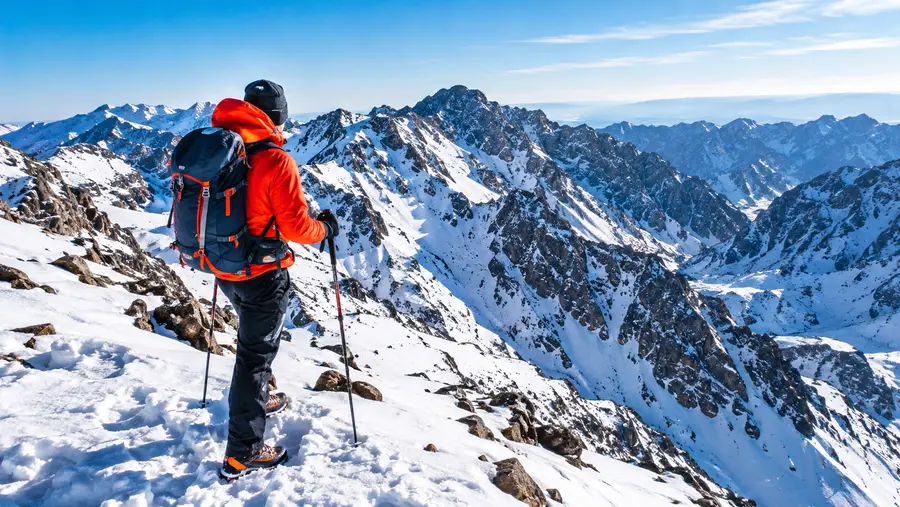
Climbing Toubkal in winter is honest mountain work. Your legs will ache from kicking steps, the thin air on the South Cirque will burn your chest, and sleeping in a sub-zero dormitory is far from luxurious. But standing beneath the metal tripod on the summit ridge at 8:00 AM, watching early light wash over snowcapped Atlas ridges while the Sahara Desert glows faintly in the southern distance, pays back every cold toe. Check your kit carefully in Imlil, take an extra acclimatization day if you can spare it, and respect the mountain when winter storms blow in.
Read more about mount toubkal trek.